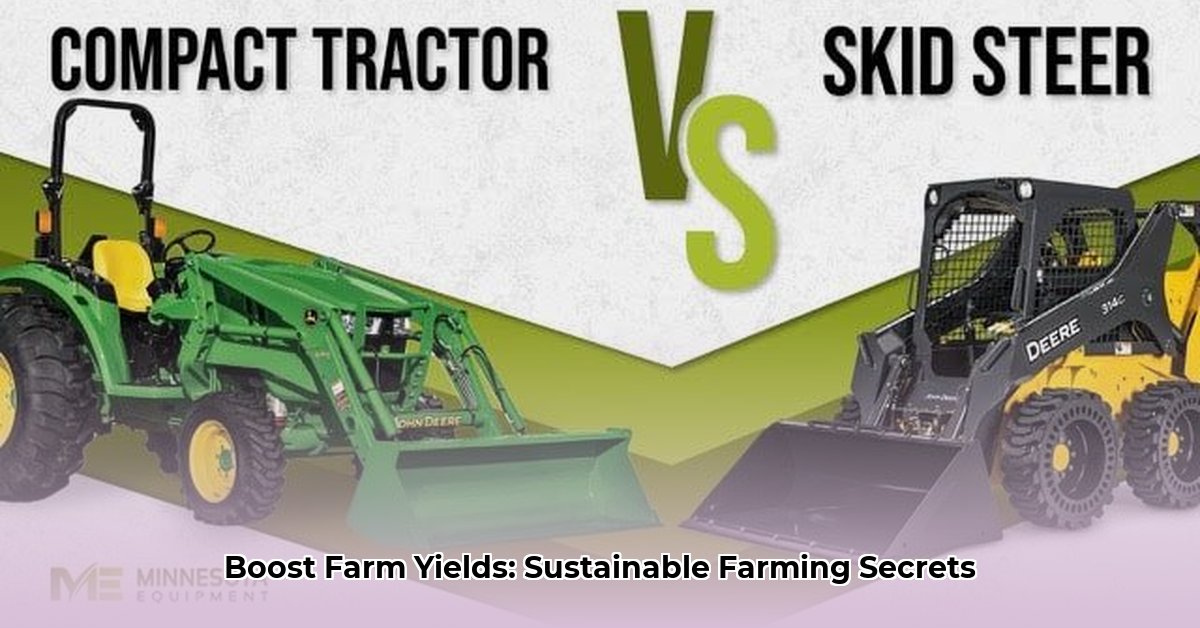
Skid Loader Tractors: Farming Smarter, Not Harder
Modern agriculture demands maximizing land yield while minimizing environmental impact. Skid steer loaders offer immense potential, but responsible operation is key. This guide details sustainable practices to boost farm productivity while protecting the environment. For more information on sustainable agricultural equipment, check out this helpful resource on crop sprayers.
Choosing Your Skid Steer Partner: The Right Machine for the Job
Selecting the appropriate skid steer is paramount. Consider your needs: wheeled models excel on hard surfaces, while tracked models minimize soil compaction on sensitive terrain. Tracked models are gentler on the soil, reducing long-term damage and promoting soil health. Wheeled models offer increased speed and maneuverability on firm ground. Fuel efficiency is critical; a fuel-efficient machine reduces operating costs and environmental impact.
Sustainable Skid Steer Strategies: Everyday Practices That Make a Difference
Implementing these practices maximizes efficiency and minimizes environmental impact:
Tire Pressure Optimization: Maintaining correct tire pressure is crucial. Under-inflation increases fuel consumption and soil compaction. Regular pressure checks ensure optimal performance and minimize ground disturbance. This simple step can significantly reduce both your operational costs and your environmental impact.
Strategic Route Planning: Pre-planning work routes minimizes unnecessary travel, reducing fuel usage and soil disturbance. Efficient routes optimize your work flow and your environmental responsibility.
Preventative Maintenance: Regular servicing ensures optimal machine performance and prevents costly breakdowns. A well-maintained skid steer operates efficiently, reducing fuel use and extending the machine’s lifespan.
Alternative Fuel Exploration: Biodiesel offers a cleaner alternative to conventional diesel fuel, significantly reducing greenhouse gas emissions. Explore available options to find the best balance of cost-effectiveness and environmental friendliness for your operation.
Precision Agriculture Integration: Incorporating GPS technology enables precise application of fertilizers and pesticides, minimizing waste and environmental impact. Precision agriculture techniques optimize resource utilization and reduce overall environmental footprint.
Long-Term Vision: Investing in a Sustainable Future
Sustainable farming requires a long-term perspective. Consider these strategies:
Technological Advancements: Investing in newer models with improved fuel efficiency and reduced emissions is a significant long-term investment in sustainability. These improvements translate to lower operating costs and a smaller environmental footprint.
Electric Skid Steer Adoption: Electric skid steers offer zero tailpipe emissions, although initial investment costs may be higher. The long-term environmental benefits, coupled with ongoing technological advancements, make this a strong consideration for the future.
Carbon Offset Programs: Participating in carbon offset programs helps neutralize the carbon footprint associated with skid steer operation. This proactive measure contributes significantly to mitigating greenhouse gas emissions within your operation.
Understanding the Risks and Mitigating Them
Potential risks and effective mitigation strategies include:
| Risk Factor | Potential Problem | Solutions |
|---|---|---|
| High Fuel Consumption | Increased greenhouse gas emissions, higher costs | Optimize route planning, choose fuel-efficient models, use biodiesel, consider electric options |
| Soil Compaction | Soil degradation, reduced crop yields | Utilize tracked models on sensitive terrain, maintain proper tire inflation, plan routes strategically |
| Equipment Malfunctions | Downtime, inefficiency, safety hazards | Implement regular maintenance schedules, provide operator training, invest in quality equipment |
Collaboration for a Greener Future
Sustainable agriculture requires collaboration. Manufacturers should develop greener machines, researchers should quantify skid steer environmental impact, and policymakers should encourage sustainable practices through incentives and regulations. A collective effort is crucial for a more sustainable agricultural future.
How to Reduce Skid Steer Environmental Impact in Sustainable Agriculture
Key Takeaways:
- Skid steer attachments increase farm efficiency, but their environmental impact needs careful management.
- Utilizing recycled or reclaimed parts reduces costs and minimizes waste.
- Regular maintenance and responsible fuel selection are crucial for sustainable operation.
- Government incentives and inter-industry collaboration can accelerate the adoption of sustainable practices.
Skid steers significantly enhance farm productivity. This section details practical strategies for reducing their environmental footprint.
Choosing the Right Skid Steer for Sustainable Operations
Selecting an appropriate skid steer is foundational for sustainable practices. Tracked models generally cause less soil compaction than wheeled models. Choosing the right model for the specific terrain is a key step towards sustainable agriculture.
Sustainable Attachments: Optimizing Efficiency and Reducing Impact
Skid steer attachments dramatically increase productivity, but choosing the right attachment is vital for efficiency and minimizing environmental impact. Selecting attachments designed for minimal soil disturbance reduces fuel consumption and preserves soil health.
- Example: Specialized tilling attachments can reduce the number of passes required for soil preparation, lowering fuel consumption and overall impact.
Fuel Efficiency: A Cornerstone of Sustainable Practices
Fuel efficiency is critical. Strategies include:
- Biofuel Adoption: Investigate the suitability of biofuels in your region. They serve as a cleaner alternative to traditional diesel fuel.
- Proactive Maintenance: Regular maintenance ensures engine efficiency, minimizing fuel consumption and emissions.
- Operational Efficiency: Avoid unnecessary idling and practice smooth operation to reduce fuel use.
Recycled Parts: Enhancing Sustainability and Reducing Costs
Using recycled or salvaged parts significantly reduces waste and lowers costs. Always carefully inspect parts to ensure they meet safety standards and source them from reputable suppliers.
Long-Term Strategies for Sustainable Skid Steer Utilization
Long-term sustainability involves:
- Investing in Durable Equipment: Investing in high-quality machines and attachments reduces the need for frequent replacements.
- Farmer Collaboration: Sharing knowledge and resources improves efficiency and sustainability across the farming community.
- Advocacy for Supportive Policies: Supporting policies that prioritize sustainable agriculture and the use of recycled materials is crucial for large-scale impact.
Beyond the Machine: A Holistic Approach to Sustainable Agriculture
Sustainable agriculture encompasses broader practices beyond machinery:
- Crop Rotation: Reduces the need for intensive tillage, promoting natural soil regeneration.
- Cover Cropping: Protects soil and reduces erosion.
These practices complement environmentally conscious skid steer utilization, creating a holistic approach to sustainable farming.